Changelog
August 23, 2026
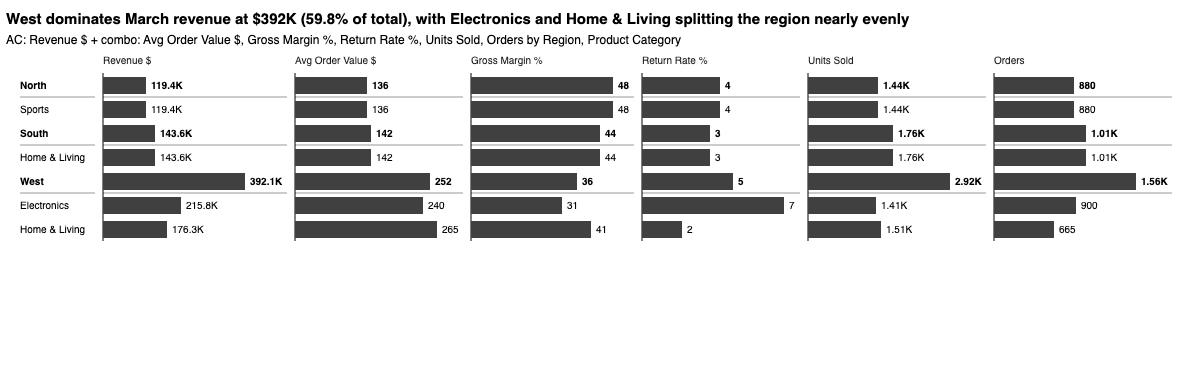
- Additional measures in Tables – Tables can now show up to six value measures, whether added manually or generated by Zebra AI.
Improvements
- Resources section in the sidebar – Access the intro video, knowledge base, and sample analyses right from the sidebar.
- Data preview redesign – Cleaner, more compact layout with clearer sections and inline dataset renaming.
- Percentage display unit for calculated measures – Calculated measures that are ratios or percentages now format automatically.
- Data cleaning improvements – More stable, consistent cleaning, now handling previously unparseable date formats.
- Accurate grand totals for all aggregations – Grand totals now calculate correctly for every aggregation type, not just sums.
July 10, 2026
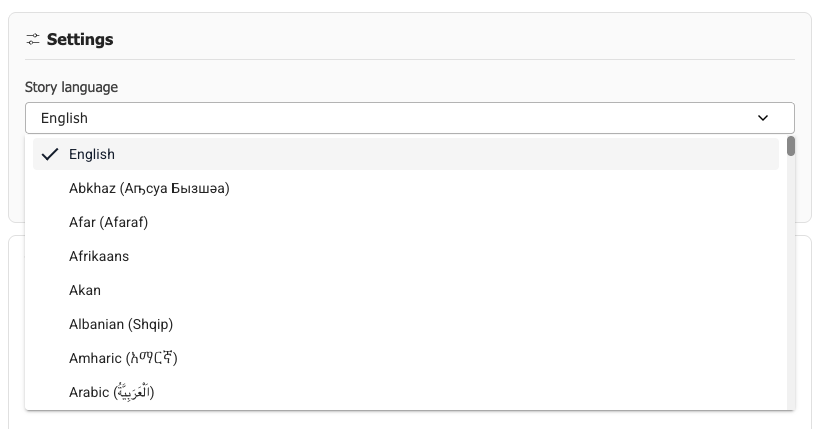
- Multiple language support – Choose a language for your story right in the data preview, from a searchable list covering all major languages — Zebra AI will then generate chart titles, summaries, and chat answers in that language across uploads, refreshes, and exports.
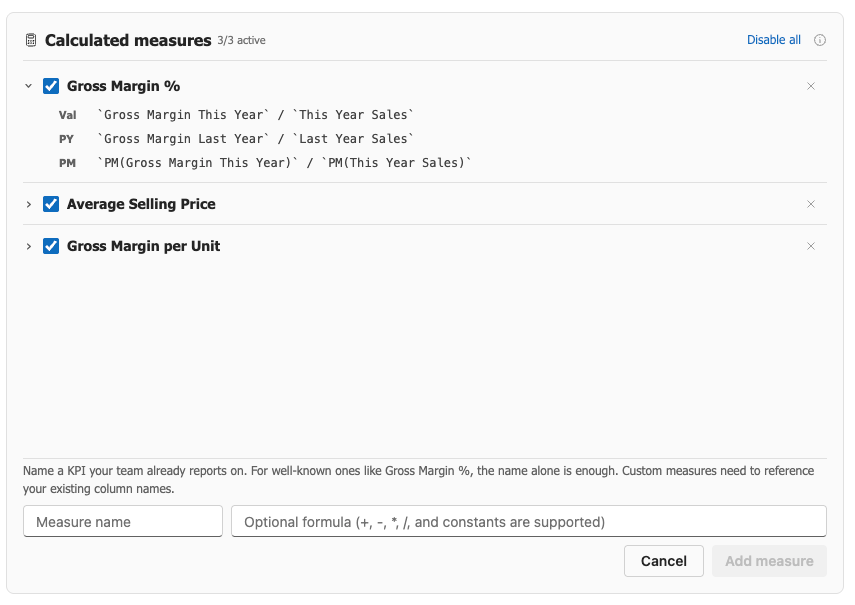
- Calculated Measures – Zebra AI automatically proposes the most relevant measures for your data; you can also create your own in plain language, and use them anywhere normal measures are used — in charts, tables, and chat.
Improvements
- Refreshing a dashboard now detects if you’ve manually edited a chart title or summary and asks whether to keep your edits or overwrite them with the newly generated text, instead of silently replacing them.
- Excel exports through Fabric now include the question and generated answer alongside each chart, plus a Story Overview sheet — matching the notes PowerPoint exports already had.
June 17, 2026
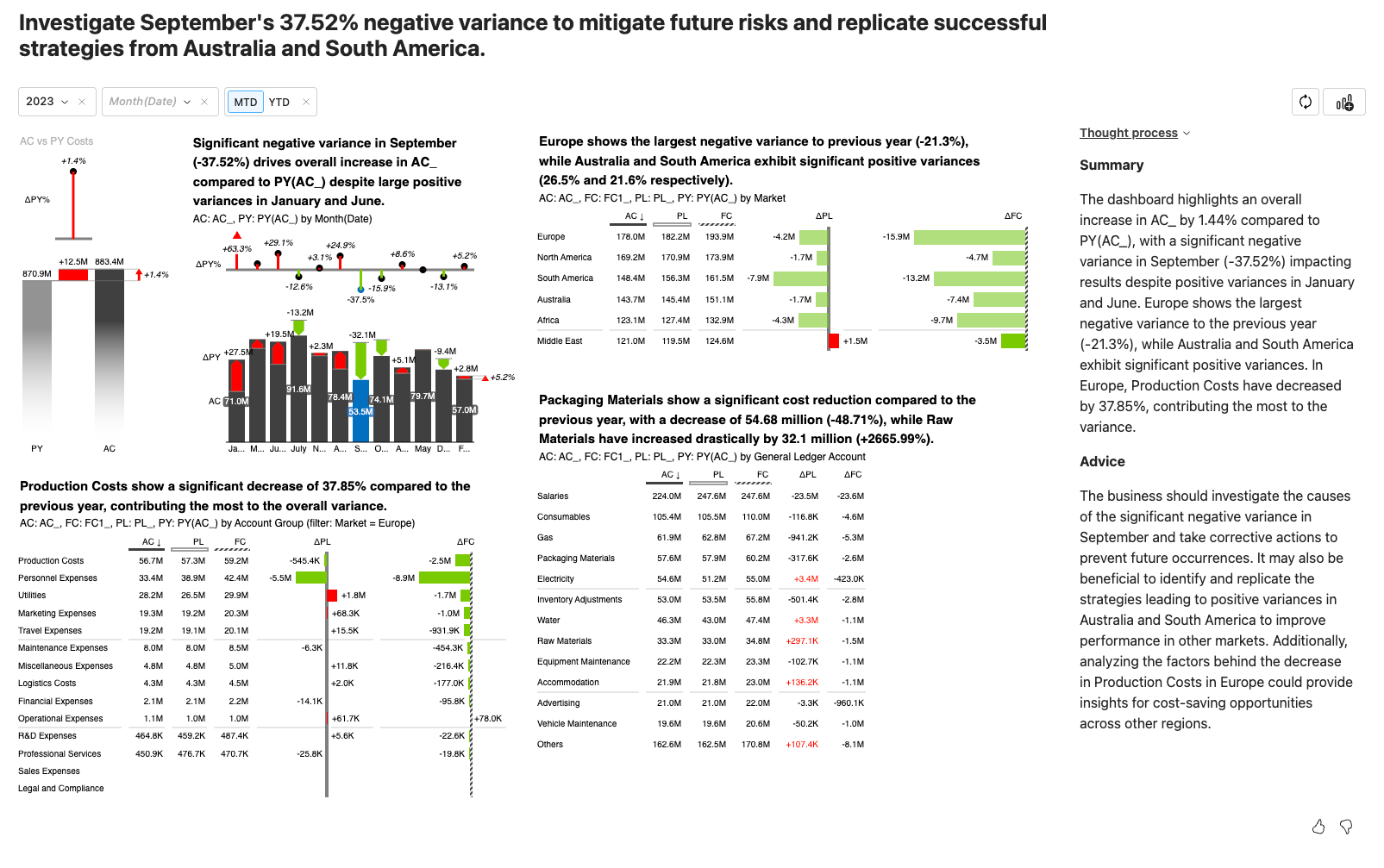
- Initial Dashboard Flow 2.0 – Your first dashboard just got a major upgrade: sharper reasoning behind every chart and insight delivers noticeably better dashboards across a far wider range of industries and datasets. Review and fine-tune the proposed plan before anything gets built, watch the thinking unfold in real time, and enjoy a smoother, more polished experience from the moment you hit “Analyze Data”.
- Pivoting in data preview – The data preview now automatically regenerates derived columns whenever you change a column’s type in a way that affects pivoting — generated columns show a tooltip explaining how they were derived and can no longer be renamed or retyped, since Zebra AI manages them automatically.
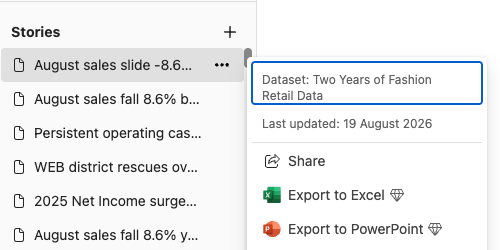
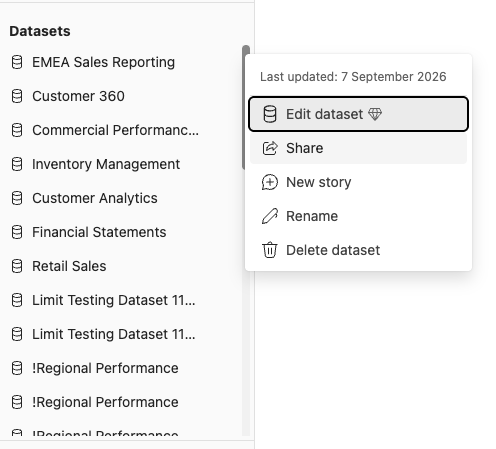
- Related dataset shown on story – See which dataset a story was built from directly in the story menu — the dataset name now appears alongside the last updated timestamp.
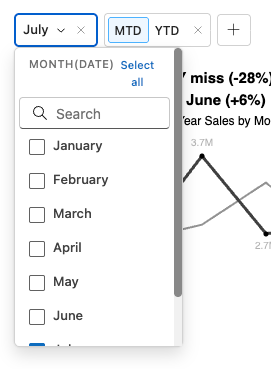
- Search added to column filters – Column filters in the filter bar now include a search box, so you can quickly find and select values in filters with long lists.
Improvements
- Measures whose values are already stored as negatives (e.g. costs pre-inverted at the source) can now be marked as “preinverted” so variance colors and increase/decrease interpretation stay correct.
- AI-assisted calculation detection now covers the main account column plus the account column with the fewest unique values by default, and users can still add more columns for AI detection or turn it off.
May 6, 2026
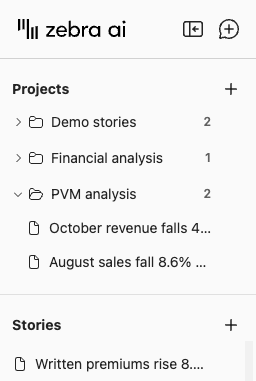
- Projects – Organize your stories into projects: create a project, rename or delete it, and move stories between projects or back to the unorganized Stories list.
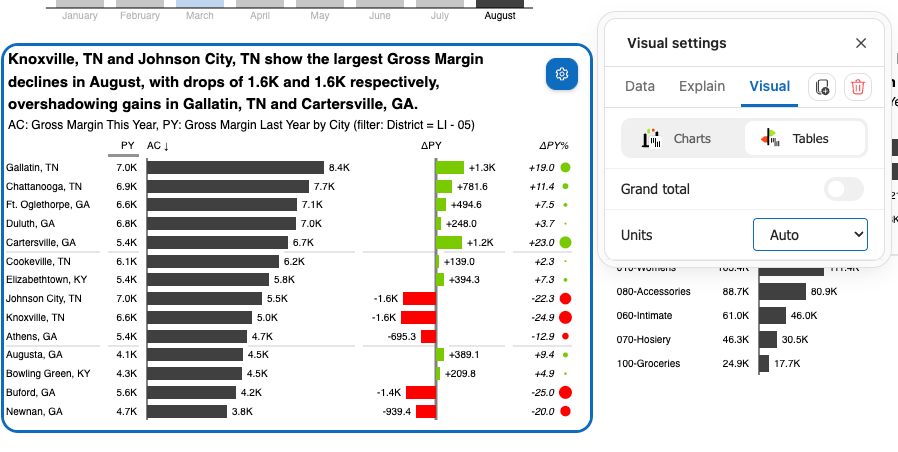
- Data Label Units – Control how numbers are abbreviated on data labels in charts and tables — choose Auto, full numbers, or Thousands/Millions/Billions — with per-row number formatting in tables still taking priority when set.
Improvements
- Measures whose values are already stored as negatives (e.g. costs pre-inverted at the source) can now be marked as “preinverted” so variance colors and increase/decrease interpretation stay correct.
- AI-assisted calculation detection now covers the main account column plus the account column with the fewest unique values by default, and users can still add more columns for AI detection or turn it off.
April 30, 2026
- Custom calculation detection for account columns – Choose how Zebra AI determines the calculation type for financial account rows directly in the data preview: detect it automatically with AI, read it from an existing column in your dataset, or turn detection off entirely.
- Editable dataset connections – Revisit and adjust a Power BI or SQL dataset after it’s already been set up — add or remove columns, refetch the latest data, and update data preview settings like column properties, data model instructions, and fiscal year start month, without starting over from scratch.
March 10, 2026
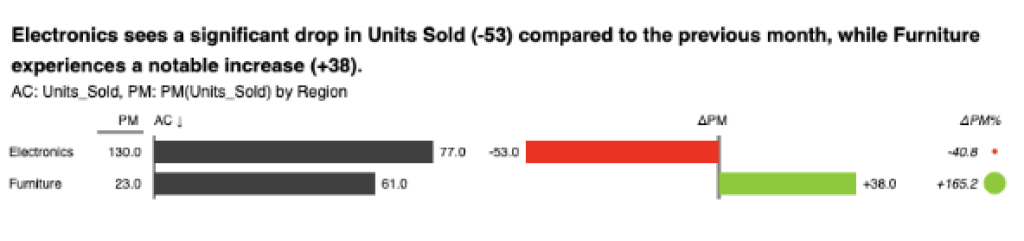
- Month-over-month comparisons out of the box – Zebra AI can now automatically generate month-to-month comparisons, enabling meaningful trend analysis even when multiple years of historical data are not available.
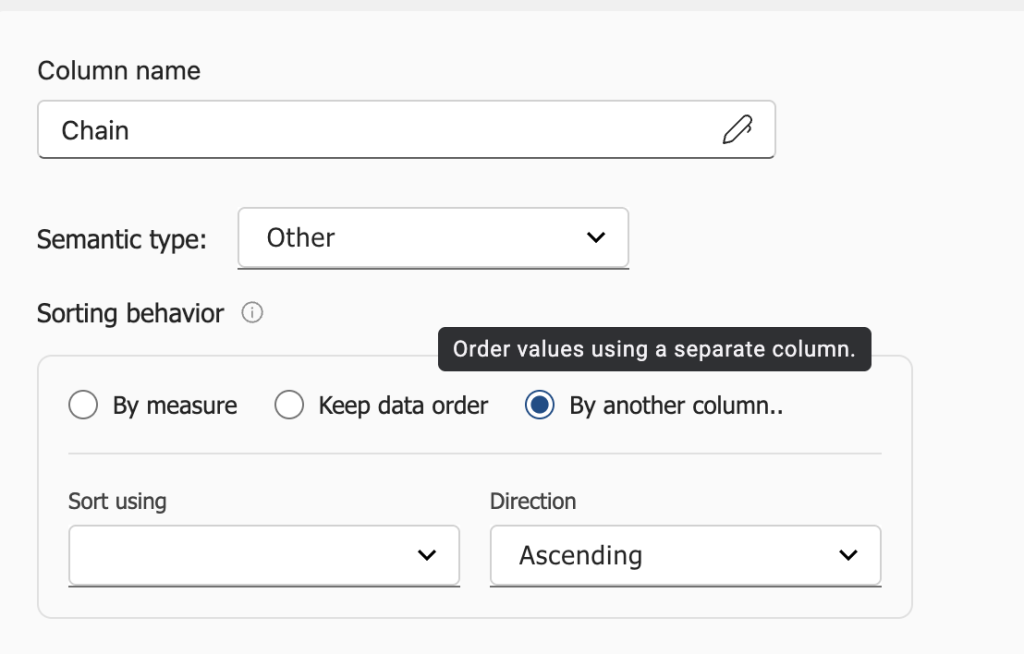
- Custom dimension sorting based on another column – Sort categories using values from another metric or column (for example ranking products by margin or contribution), enabling clearer financial analysis.
- Collapsible chat messages in Stories – Keep your narrative focused by collapsing intermediate analysis steps while preserving the reasoning behind results.
- Edit or remove the last chat message – Quickly refine the latest step in your analysis without restarting the conversation.
Improvements
- Various bug fixes and stability improvements across the chat and story experience.
January 23, 2026
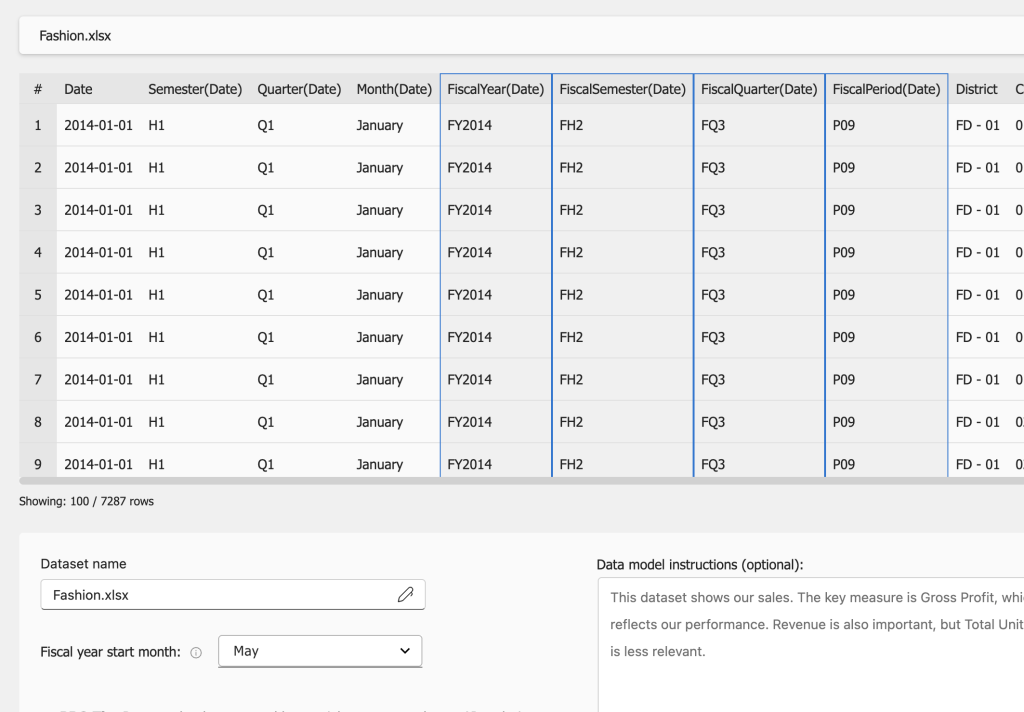
- Fiscal year support – Define a custom fiscal year start month in the data configuration step. All time-based analyses, filters and visuals automatically respect your fiscal calendar by default.
- Custom sorting by user intent – The AI agent can now sort results according to your instructions (for example ranking products by revenue, or revenue growth compared to a different period, ascending/descending etc.).
Improvements
- Improved PowerPoint export – Multiple stability improvements and the ability to export two visuals per slide for more compact presentations.
- Multiple stability improvements & minor bugfixes
December 30, 2025
- Two-level hierarchies in tables – Analyze hierarchical structures such as Region → Country, Category → Product, or financial account groups → individual accounts, making it easier to explore both operational and financial breakdowns directly in Zebra BI Tables.
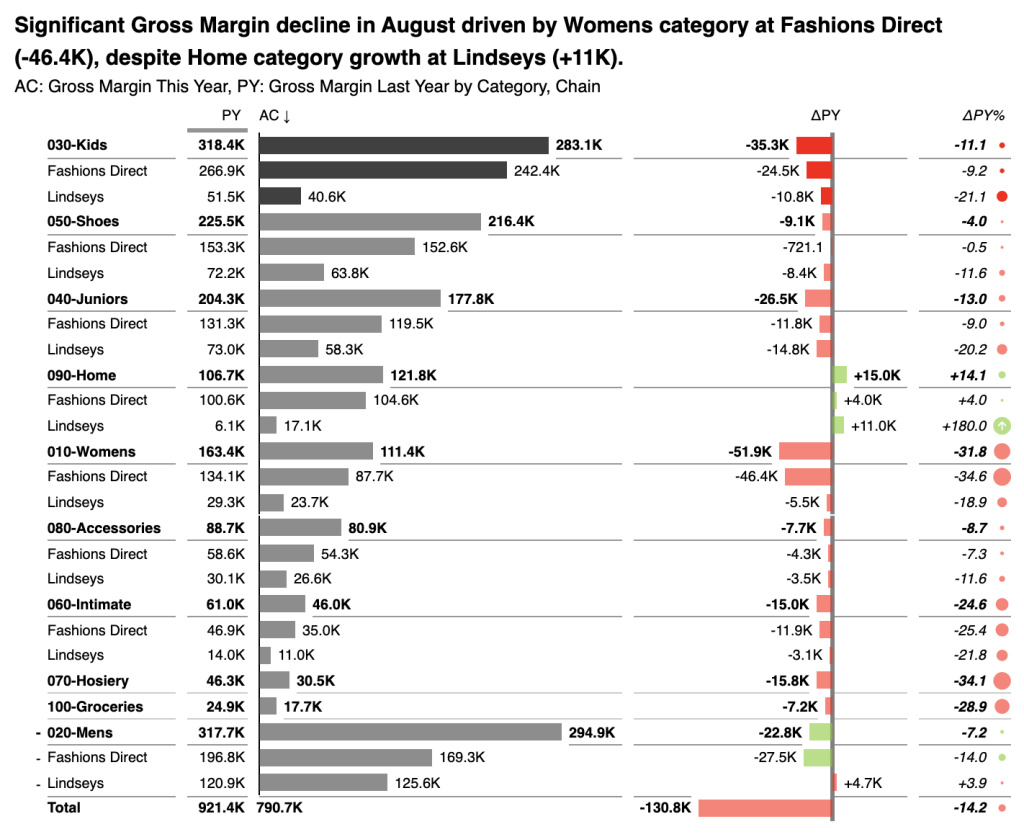
- Grand total row – Tables now automatically show a clear grand total for easier interpretation.
- Editable dashboard headlines – Customize the main message of your dashboard to highlight key insights.
- Dashboard refresh – Quickly refresh dashboards when underlying data changes.
- Story copying – Duplicate an existing story to reuse analysis or create variations.
Improvements
- Smarter data upload validation – The upload experience now surfaces potential data issues earlier and provides clearer guidance when cleaning datasets.
November 12, 2025
- UI connection support for non-Premium Power BI datasets – Connect to standard Power BI datasets and select columns Zebra AI should analyze using the friendly selection UI.
- Exports within Microsoft Fabric added – Easily export results and dashboards to Excel and PowerPoint as part of Zebra AI for Fabric.
- Miscellaneous:
- Improved AI reasoning and more structured analytical outputs.
- Minor UI fixes and stability improvements.
September 18, 2025
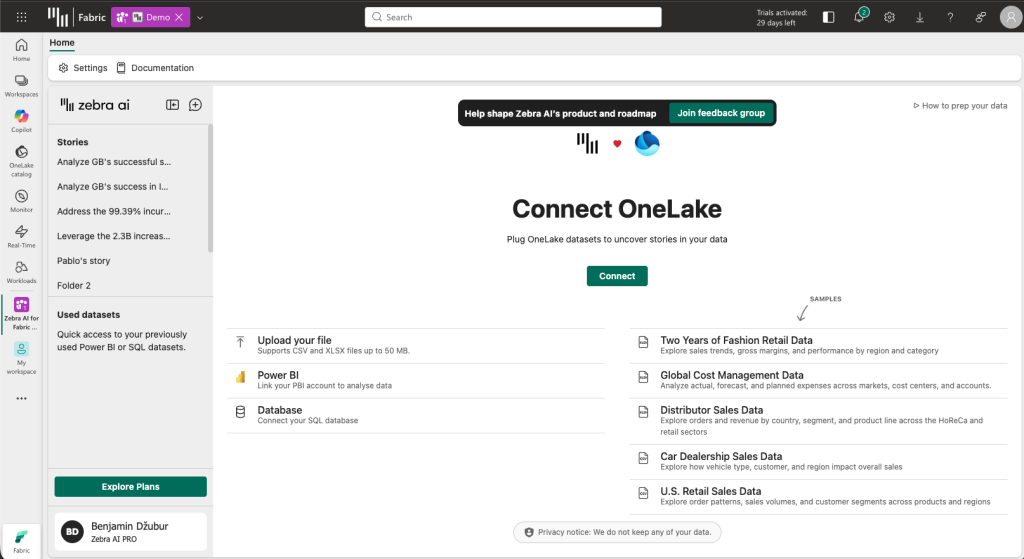
- Introducing Zebra AI for Fabric – Run Zebra AI analysis directly within Microsoft Fabric environments.
- Zebra AI for Fabric additinoally supports OneLake Warehouse connections
- Improved handling of datasets with partial-year data, ensuring accurate comparisons and time-based insights.
- Miscellaneous:
- Reduced latency for faster responses.
- Mobile UI fixes and several minor usability improvements.
- Introducing Zebra AI for Fabric – Run Zebra AI analysis directly within Microsoft Fabric environments.